Identifying asbestos
How to identify asbestos in your home
Learn how to identify asbestos in your home, why looking is never enough, and the signs that mean test first. Call our Toowoomba team for advice.
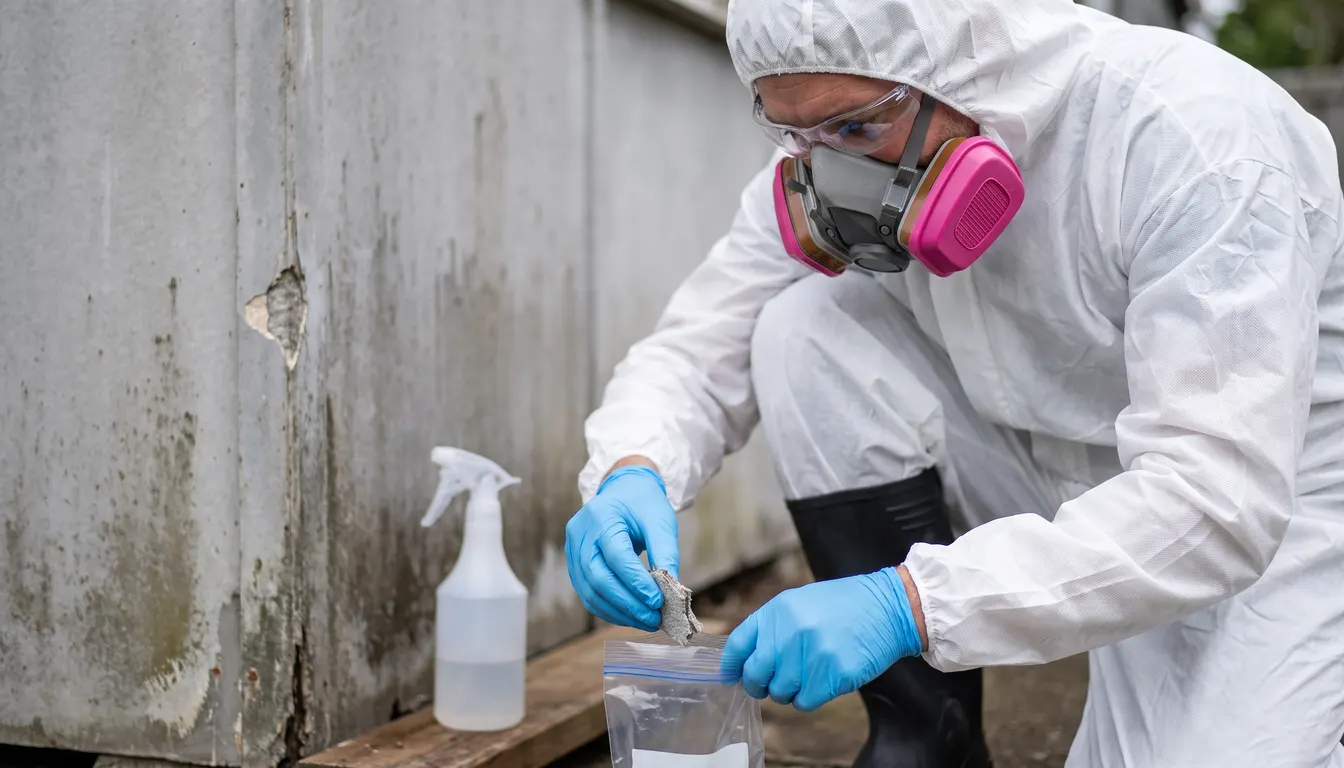
Learning how to identify asbestos in your home starts with an uncomfortable fact: you cannot do it by looking. Asbestos cement sheeting looks much like modern fibre cement, and plenty of safe materials look suspicious. Only a laboratory can confirm it.
What you can do is work out how likely it is, and then decide whether to test. This guide shows you how.
Start with the age of the building
Age is the best clue you have. Asbestos cement sheeting was commonly used in Australian buildings from the 1940s to the late 1980s. A national ban on using asbestos started on 31 December 2003, and it does not apply to material already installed.
A useful rule of thumb from the Queensland Government is that a home built before 1990 is likely to contain some asbestos. A home built after 2003 is unlikely to, but renovations and reused materials can complicate things.
Toowoomba has many older houses, including traditional Queenslanders. If yours is in that group, treat unknown sheeting with caution.
The kinds of material to look at
You are not looking for the word "asbestos". You are looking for materials that were commonly made with it. Pay attention to:
- flat cement sheeting on walls, ceilings, eaves and in wet areas
- corrugated roof sheeting and roof capping
- fibro cladding on outside walls, fences, sheds and carports
- vinyl floor tiles, and the backing on old sheet vinyl or lino
- textured paint and plaster patching compounds
- flues, downpipes and old water pipes
Our guide to where asbestos is found in Queensland homes goes through the house room by room.
Friable or non-friable
This is the difference that matters most for safety.
Non-friable (bonded) asbestos is locked into a firm material such as cement. It typically contains up to 15 per cent asbestos and does not release fibres unless it is damaged or worked on. Flat and corrugated sheeting, downpipes and vinyl floor coverings are examples.
Friable asbestos can be crumbled to powder by hand when dry. It includes sprayed insulation, pipe lagging and the lining of some old heaters, stoves and hot water systems. Low density asbestos fibre board, such as Asbestolux, is treated as friable. Only a Class A removalist may remove it.
You cannot reliably judge which is which by eye either, so a sample result and a professional opinion are worth having.
What not to do while you investigate
- Do not saw, sand, scrape or drill into the material to see what is inside.
- Do not use a high pressure water cleaner on it. Homeowners can be fined up to $10,000 for this.
- Do not break off a piece for a quick test.
- Do not vacuum dust with a household vacuum cleaner.
Looking at a material from a distance is fine. Touching, cutting and cleaning is where the risk starts.
Signs that mean test first
Get the material tested before any work if:
- the building was built before 1990 and you plan to cut, drill, sand or remove anything
- sheeting is cracked, broken, weathered or crumbling
- a storm or fire has damaged the material
- you cannot find any record of what the material is
- a tradie asks whether you know it is asbestos-free
If you cannot test straight away, the safe approach is to assume it contains asbestos and leave it alone. Our asbestos testing service in Toowoomba covers sampling and accredited lab analysis. You can also read what happens in the lab in how asbestos samples are tested.
The Queensland Government keeps current guidance at asbestos.qld.gov.au. Rules change, so check there too.
Not sure what you are looking at?
Call (07) 3185 2323 and describe it to us. We will tell you whether it is worth testing and what the sensible next step is. Or head back to the home page to see everything we do.
FAQ
Frequently asked questions
Is asbestos dangerous if I leave it alone?
Well-maintained asbestos cement is generally not a risk unless it is physically disturbed. Fibres become a problem when material is damaged, cut or broken. If it is in good condition and you have no plans to work on it, it can often stay where it is.
Does a fibro house always contain asbestos?
Not always, but fibro from before the late 1980s often does. The only way to be sure is a sample examined by an accredited lab. Until you know, treat it as asbestos.
What should I do if I think I have found asbestos?
Stop work, keep people and pets away, and do not sweep or vacuum. Leave the material as it is and call us for advice.
Get a free asbestos quote in Toowoomba
Call now. We can arrange a site visit to work out the safest way to deal with the asbestos.
More guides
More on asbestos testing
Where Asbestos Is Found in Queensland Homes
Room by room: the places asbestos hides in older homes.
Learn moreAsbestos Checks When Buying a House in Toowoomba
What to ask about asbestos before you buy an older home.
Learn more