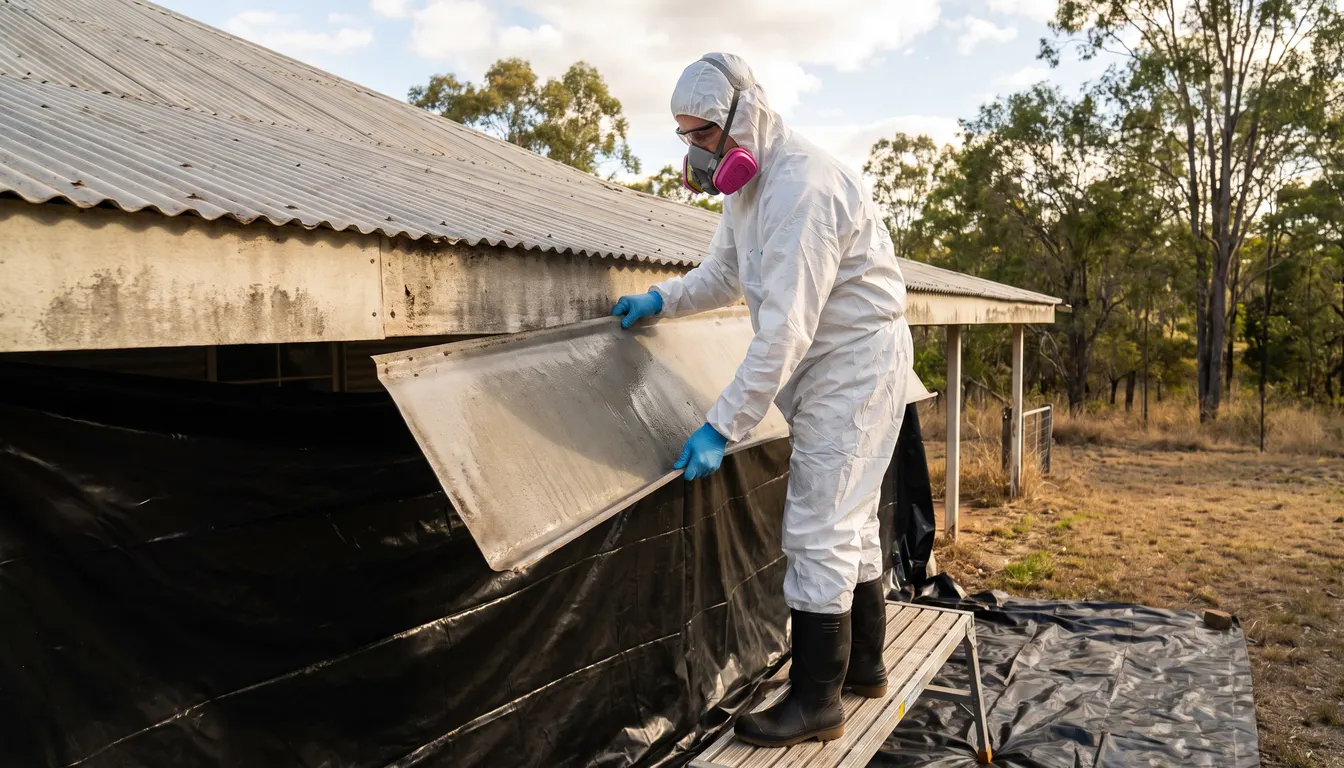
Wall and eaves sheeting
Asbestos wall, eaves and bathroom sheeting removal
Asbestos wall and eaves sheeting removal in Toowoomba: fibro walls, soffits and wet areas before a renovation. Call (07) 3185 2323 to plan the job.
Asbestos wall and eaves sheeting removal in Toowoomba is usually triggered by a renovation. Fibro sheeting was used on external walls, under the eaves, and inside kitchens, bathrooms and laundries in homes built before the late 1980s. This guide covers where it hides, what is allowed and how removal works.
Where wall and eaves sheeting turns up
Asbestos cement sheeting was widely used from the 1940s to the late 1980s. In a typical older house, check:
- external wall cladding, often flat sheets with cover strips over the joins
- eaves and soffits, the flat sheets under the roof edge
- gable ends at the top of the walls
- bathroom, kitchen and laundry walls, especially behind tiles
- ceilings in wet areas and in verandahs or sunrooms
- the backs of cupboards and behind built-in vanities
Wet areas are common because the sheeting resists moisture. If your bathroom was built or last renovated before 1990, treat the walls as suspect until tested.
You cannot tell by sight
Fibro looks like many other products. Paint, tiles and later repairs hide the detail. Plaster patching compounds and some textured paints from the same period can also contain asbestos. A sample sent to a NATA-accredited lab is the only way to be sure. See asbestos removal in Toowoomba for how that fits into a job.
Before you cut, drill or demolish
A new power point, a towel rail or a window opening needs a drill or saw. Do not do any of these on suspect sheeting:
- cut it with a power tool
- drill holes for fixings or pipes
- break it with a hammer or crowbar for demolition
- sand it before painting
- scrub it with a pressure cleaner
If you have already disturbed sheeting, stop work, keep people out and call us. Wipe-down, clean-up and disposal have to be done carefully.
What removal looks like
A licensed Class B crew typically does this.
- We confirm the material by sampling.
- We prepare the Asbestos Safe Work Method Statement (SWMS) for the job.
- The room or the wall zone is sealed with plastic, and the sheeting is kept damp where it is safe.
- Sheets are unscrewed or released from the frame and taken out whole where possible. Nail heads and edges are handled by hand.
- Waste is wrapped, sealed and labelled, then taken to a facility licensed to receive it.
- We do a complete site clean, including the floor, framing and any dust in cavities.
- An independent assessor or competent person inspects the area and you receive a clearance certificate.
The inspection is done by someone who is separate from the removal crew.
Eaves are easy to forget
Eaves are often left until last, which is a mistake. Sheets sit above head height and are close to the roof, so they get disturbed during re-roofing, gutter work or painting. If you are planning roof work, ask about the eaves at the same time. Our asbestos roof removal guide covers the roof side of that project.
Bathrooms and wet areas
The sheets may sit behind tiles, with adhesive and grout over the top. Taking tiles off can crack the sheet beneath.
Some practical points:
- the sheet may be fixed with nails or screws through the tiles
- the floor of the bathroom may be vinyl or sheet flooring, see asbestos floor tile and vinyl removal
- pipework and fittings may pass through the sheeting
- a ceiling in the same room may be fibro too
Removing a bathroom wall is a common size for a homeowner job. We work across the Toowoomba suburbs. Ten square metres is usually about one wall of an average bathroom, or around four wall sheets.
What are the rules?
A homeowner can remove 10 square metres or less of bonded asbestos without a licence, as long as they follow the safety rules. That includes wetting, protective gear and correct waste handling. The whole job counts, not each day. Over 10 square metres, a licensed contractor or certificate holder must do the work. Our contractors hold a Class B licence.
Low density fibre board, sometimes sold under the name Asbestolux, is treated as friable. It can appear in older ceilings, wet areas and behind heaters. Only a Class A licensed removalist can take it out. If your sheeting looks lighter, softer or more like board, call us before you touch it.
Rules change, so check the current requirements at asbestos.qld.gov.au.
FAQ
Frequently asked questions
Can I paint over fibro walls?
Painting intact sheeting is possible if the surface is not sanded or scraped. Any preparation that disturbs it is a problem. Ask us when you call if your walls are suitable.
How do I know if the bathroom sheeting is asbestos?
Look at the age. If the bathroom was built or renovated before 1990, test before you start. Only a lab result can tell you for sure.
Can I just board over the top?
Covering intact sheeting can reduce the disturbance in some cases. But you will still have asbestos in the wall, and fixing the new lining usually means drilling or nailing through the old sheet. Ask us to look at your plans.
Who inspects the room afterwards?
An independent assessor or competent person, separate from the removal crew, checks the area. You then receive a clearance certificate.
Get a free asbestos quote in Toowoomba
Call now. We can arrange a site visit to work out the safest way to deal with the asbestos.
More guides
More on asbestos removal
Asbestos Roof Removal in Toowoomba
What happens when an old fibro or corrugated asbestos roof comes off.
Learn moreAsbestos Fence Removal in Toowoomba
How to tell if your fence is asbestos, and how it is removed.
Learn moreAsbestos Shed and Garage Removal
Old sheds and garages: what to check and what removal involves.
Learn more